TL;DR
- Wax exists to stop corrugated board losing strength once it is wet. Surface coating sheds spray and condensation; deep-dipped board survives melt water and repeated cold-chain handling. On dry ambient lanes neither one earns its line item.
- Samples take 7 days; mass production runs 15 days from artwork and die approval. MOQ differs by product and construction and is confirmed on the drawing. Our quotations hold for 7 days.
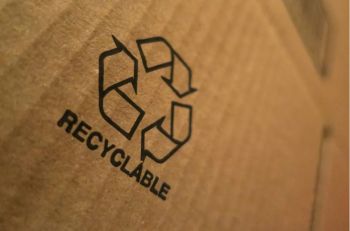
- Deep wax and PE laminates make a recyclability claim harder to defend under the EU packaging rules that have applied since 12 August 2026. Settle the coating before anyone prints a recycling line on the box.
If you ship fresh produce, seafood or chilled meat, the carton has to hold its load while wet, and the first part to fail is the board rather than the print. This page covers the coating choice, the board and flute we run under it, the MOQ and lead times we publish, and the checks we make before a run starts.
What the coating is doing to the board
Corrugated board gets its strength from the flute standing upright between two liners. Water breaks that structure: the fibres swell, the flute crushes, and a stack that held seven high in a dry warehouse drops its bottom layer. A coating buys time, and how much time depends on which coating you bought.
Surface coating sits on the liner and handles spray, condensation and the walk from cold store to truck. Deep-dipping takes the finished box through a wax bath, so cut edges, score lines and inside walls are covered too. If your cartons stand in melt water on a cold-chain dock, only the second system is doing real work.
The third option is a water-based barrier coat: repulpable in most mill furnishes, comfortable with humidity and short condensation, and not built for hours of standing water. We say that before you order, not after the first container arrives leaking.
The lanes where wax is the wrong answer
Wax is a cost that only part of your journey justifies. If your produce moves through a dry distribution centre and sells within 48 hours of delivery, the wet exposure your box sees is condensation on the truck floor. A plain kraft carton in a strong C-flute with the right vent pattern costs less, weighs less and freights cheaper.
The second case: boxes stacked by hand rather than by clamp truck. Deep-dipped board is slick, and slick on slick stacks badly. On a hand-stacked pallet that becomes anti-slip sheets, a second line item solving a problem the first one created. If your pallet is hand-stacked, tell us, and we will quote a surface coating plus a layer pad instead.
The date that now sits on the coating decision
Regulation (EU) 2025/40 on packaging and packaging waste has applied generally since 12 August 2026, and it sets an economically viable recyclability requirement for packaging placed on the EU market by 2030, together with a 50% ceiling on empty space for grouped, transport and e-commerce packaging. Wax disperses into the pulper. PE and heavy laminate films do not, and they are the first thing a recovery operator screens out.
We are not telling you a waxed box is forbidden. Coating systems are not blanket-banned for fibre packaging, harmonised sorting labels are still rolling out, and enforcement differs between Member States. What we are saying is that a deep-waxed box and a plain kraft box do not support the same claim, and the difference belongs on the drawing. Our PPWR guide for paper packaging buyers sets out the dates.
Who actually holds the food-contact paperwork
Food-contact material sits under Regulation (EC) No 1935/2004. It is a framework: it requires that material in contact with food does not transfer constituents in quantities that endanger health or change the food, and it leaves the detail to material-specific measures and national enforcement. The duty lands on whoever places the material on the market, which for an imported carton is normally your importer or you, not the factory that printed the sheet.
What we can do is put the facts on paper and say which papers we cannot attach. On produce and seafood cartons we state the board, the flute, the coating system and the print finish, and we issue the material declaration that goes with that specification. We will not sign a declaration covering a product we did not make. If your buyer needs a document we cannot legitimately issue, you hear it before the deposit.
Board and flute under the coating
These are the options we actually run on fresh-produce and seafood work. Where a field is not published on our product pages, we say so rather than printing a number that would mislead you.
| Field | What we run | Where it decides the outcome |
| Board grades | Kraft liner, white top liner, CCNB and greyboard for the rigid formats | Kraft holds strength when damp, white top prints cleaner for retail, CCNB takes the printed graphic at lower cost |
| Flute | E, B, C and BC, plus heavy-duty configurations for high-stack sea freight | E flute at 1.5–2 mm for retail trays, C or BC for a 5-layer stack that has to survive 25–35 days at sea |
| Coating systems | Surface coating, deep-dipping, water-based barrier coat | Deep-dipping is the only one of the three that protects cut edges and the inside walls |
| MOQ | Differs by product, size and construction; the widest range published on our product pages is 500–1,000 units for corrugated and folding boxes and 300–1,000 units for rigid boxes | The exact figure follows your drawing, and we confirm it in writing before the deposit |
| Sampling and production | Samples 7 days; mass production 15 days after approval | The clock starts when artwork and the die are signed off, not when the enquiry arrives |
| Quotation validity | 7 days from issue | Board and freight move; after that we re-quote rather than let a stale figure stand |
| Structure tests | ECT (edge crush), Mullen burst and compression testing on request | The number your pallet needs is a stacking load, and ECT is the input we quote against |
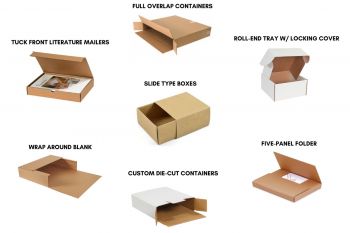
| Venting and access | Ventilated panels, die-cut handles, hand holes, custom dies | Vent area and handle placement are cut into the die; adding them later means a new die |
What we check before a run starts
- The packed weight and stack height in numbers. The load on the bottom carton is not the weight of your own box.
- Which hours of the journey are wet. A cold-chain leg and a rainy port count; a dry inland leg does not.
- The coating system, written next to the board grade, not left as "waterproof".
- Vent area as a percentage of the panel if the produce respires.
- The die drawing, signed, before board is ordered. Hand holes, vents and the glue flap all live in that drawing.
- The documents your destination market requires, named, and who issues each one.
What these formats cost on our site today
These are the prices published on our own product pages in September 2026. They move with size, board grade and print run, so read them as the shape of the range and not as a quotation.
| Format | Structure and coating as listed | Site price, Sep 2026 | Where it fits |
| Wax-coated RSC carton for frozen seafood | Corrugated slotted box or custom die-cut, wax treated, kraft or white liner | US$0.50–US$2.00/pcs | Frozen shrimp, fish and meat with melt water on the dock |
| Waxed carton in 5 kg, 10 kg, 20 kg and 25 kg sizes | Corrugated board, waterproof wax treatment, custom print | US$0.50–US$2.00/pcs | Produce and seafood packed to a fixed net weight per box |
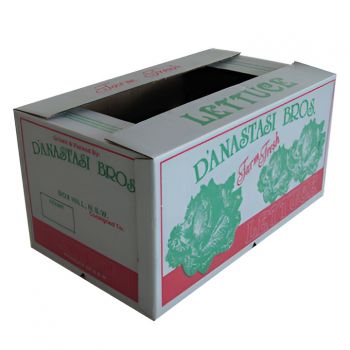
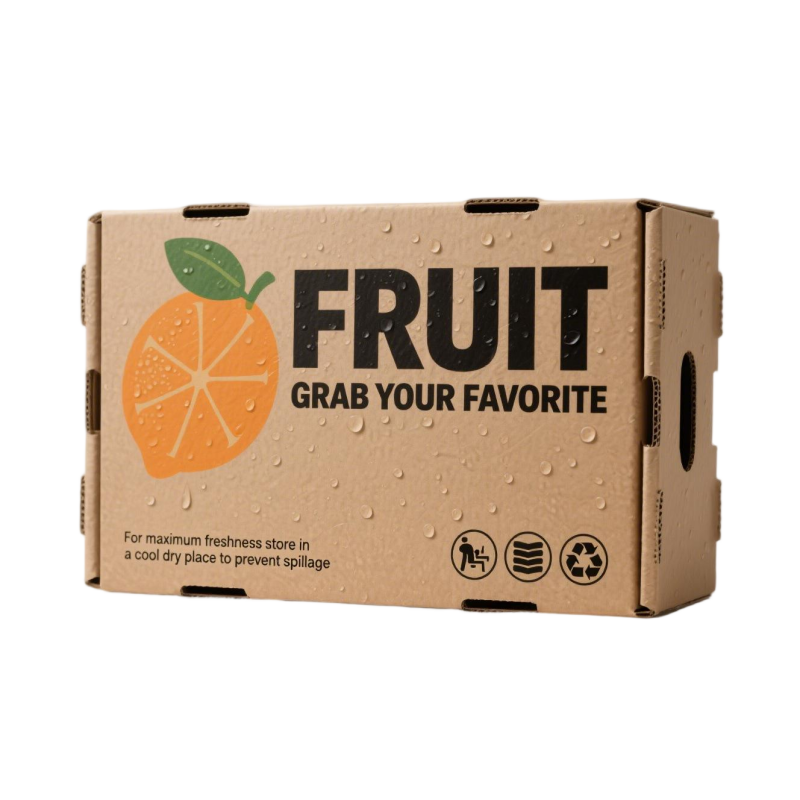
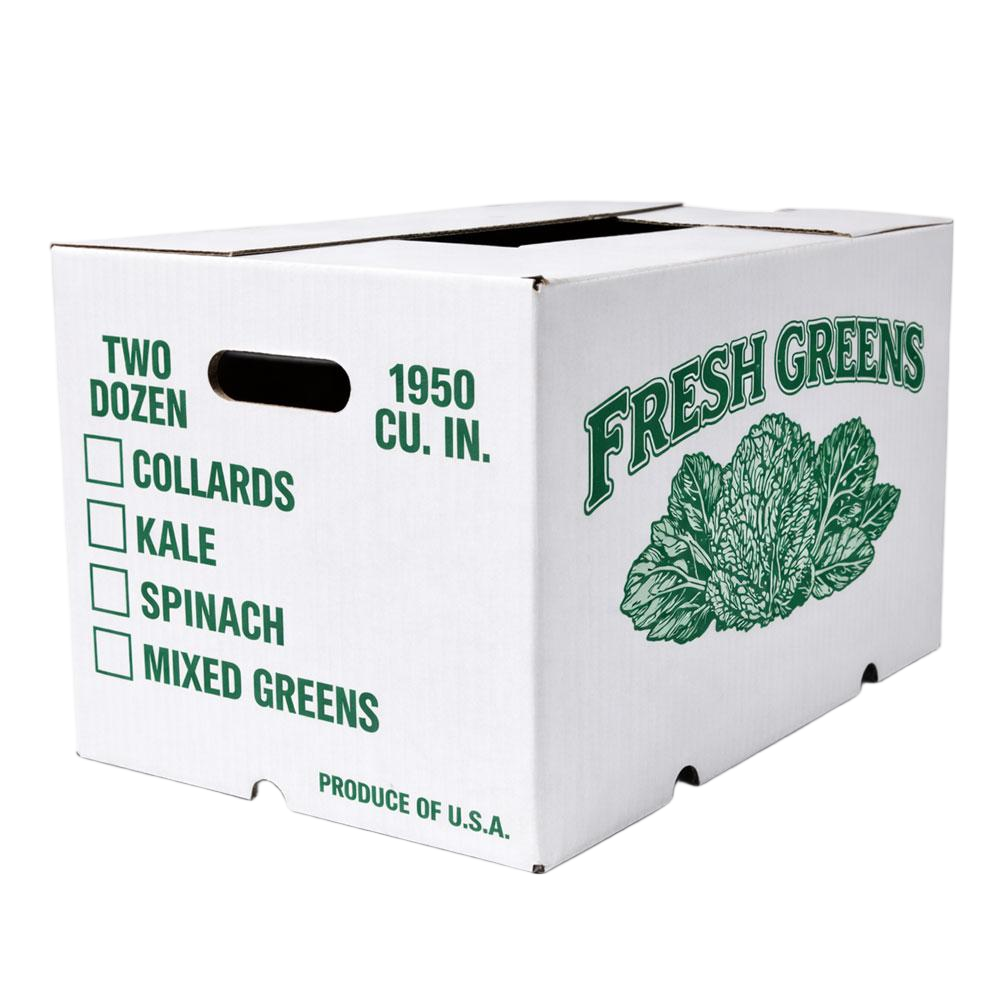
| Heavy-duty produce carton with ventilated panels | Corrugated board, die-cut handle, ventilated panels | US$0.50–US$2.00/pcs | Leafy greens and packed produce that respires in transit |
| White wax-coated vegetable box | White top liner, corrugated, wax coated | US$0.50–US$1.50/pcs | Retail-facing produce where the print has to read clean |
| Corrugated fruit and vegetable tray | Corrugated board tray, custom die | US$0.50–US$1.00/pcs | Field-packed produce moving dry, where coating adds nothing |
Two ranges sit next to this one. To tighten a pallet without adding wax, our Corrugated Cardboard Sheet and Layer Pads covers anti-slip sheets and layer pads; where the load needs a rigid separator instead of more board, look at Honeycomb Cardboard Sheet And Related Products. Both are quoted per size.
Everything above sits inside Vegetable Box & Fruit Box & Seafood Boxes, our largest single range with 91 models, including the 5 kg to 25 kg cartons and the waxed seafood boxes shown here. The wider Food And Beverage Boxes category covers the bakery and beverage side of the same material question.
Frequently asked questions
Do I need a waxed box for chilled produce that never touches ice? No. Condensation is the only water a dry, chilled load usually sees, and a kraft carton in C or BC flute handles that. Buy the coating when the box actually stands in melt water.
What is the MOQ on these cartons? There is no single number across the range. Minimum order quantity differs by product, size and construction, so we confirm it against your drawing. The widest range published on our product pages is 500–1,000 units for corrugated and folding boxes and 300–1,000 units for rigid boxes.
How long does a coated carton take from approval to shipment? Samples take about 7 days and mass production runs about 15 days after artwork and the die are approved. Coating adds freight weight rather than a production stage.
How long does your quotation hold? 7 days from the date we issue it. Board, coating and freight move, so after that we re-quote against current numbers.
Does deep waxing make the box unrecyclable? Not automatically, and we would not put it that way. It makes an economically viable recyclability claim harder to defend under the direction of Regulation (EU) 2025/40, and the recovery route in your destination market decides the rest. Ask for the coating system in writing and check it against what your market actually collects.
Can you supply the food-contact declaration for the carton? We provide the documents that legitimately attach to what we make, including the material specification and declaration that goes with it. Registering as the obligated party in a destination market is not something a factory can do on your behalf, and we say so before production.
Which flute should I take for a 25 kg box? The answer follows the stacking load, not the weight inside the box. As a working rule, produce cartons in the 5–25 kg range that stack four or more high in a container are quoted in C or BC flute, with ECT confirmed against your stack height. Send the stack count with the weight and we quote against that.
Sources
- Regulation (EU) 2025/40 on packaging and packaging waste, general application from 12 August 2026, recyclability requirement by 2030, 50% empty-space ceiling for grouped, transport and e-commerce packaging: EUR-Lex.
- Regulation (EC) No 1935/2004 on materials and articles intended to come into contact with food, framework obligations and the role of national enforcement: EUR-Lex.
- European Commission food-contact materials pages, for the material-specific measures that sit under the framework: European Commission, DG SANTE.
- Coating and recycling guidance for fibre packaging, used here as industry guidance rather than law: RecyClass and 4evergreen.
- Board grades, flutes, coating systems, structure tests and unit prices: birtleypack.com product pages, checked 22 September 2026. Sample and production lead times (7 and 15 days), MOQ policy and 7-day quotation validity confirmed with our export team on the same date.
Last verified: 22 September 2026 by our export and product documentation team. The regulation text prevails over this summary, and the recyclability and sorting-label position is still developing, so we re-check against EUR-Lex before you commit tooling.
Send the three inner dimensions, the packed weight, your stack height and the destination port, plus whether the load sits in melt water at any point.
BDL Free Design Custom Logo Cardboard Luxury Magnetic Gift Box
BDL Custom Logo Thermal Pizza Box with Aluminum Foil Lining
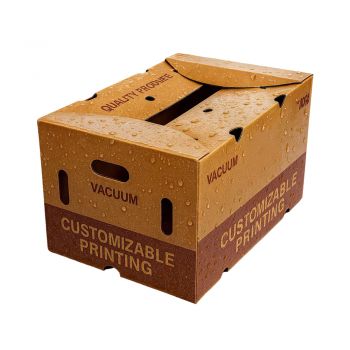
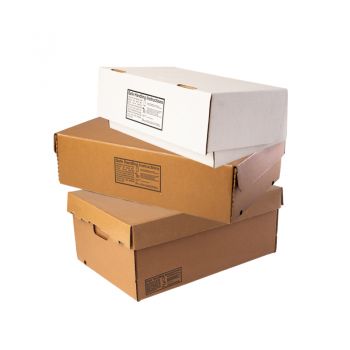
BDL China Factory Custom Fresh Seafood Wax Corrugated Cardboard Cartons