TL;DR
- EU Regulation 2025/40 (PPWR) has applied since 12 August 2026 and replaces the old Packaging Directive. It binds whoever places packaged goods on an EU market, not the country the carton was printed in.
- For paper packaging the two rules that bite are the 50% maximum empty-space ratio on grouped, transport and e-commerce cartons, and the requirement that all packaging be recyclable in an economically viable way by 2030.
- The recycled-content percentages in PPWR are written for plastic. Nobody should charge you a "PPWR recycled content surcharge" on a fibre box.
If you sell packaged goods into the EU and your cartons come from China, PPWR is now a paperwork problem for you, not a design problem for your supplier. Here is what changed in August, what a paper box still has to survive, and where the rule does not touch you at all.
The dates that change your paperwork
We read the regulation next to the Commission's own guidance for businesses. These are the dates that matter for a fibre packaging order.
| Date | What applies | The number | Who carries it | What changes on a carton |
| 11 Feb 2025 | Regulation (EU) 2025/40 entered into force | — | EU legislator | Nothing yet; the compliance clock started |
| 12 Aug 2026 | General application date; the 1994 Packaging Directive (94/62/EC) is generally repealed, some provisions carry on | Directly applicable in all Member States, no national transposition | Every economic actor placing packaged goods on an EU market | New cartons must meet the eco-design rules from day one, not at next year's re-quote |
| By 2029 | Separate collection of single-use plastic and metal beverage containers | At least 90% per Member State; deposit return systems if other means fall short | Member States, then your bottler customer | Affects beverage carriers and sleeve design more than the outer carton |
| By 2030 | All packaging on the EU market recyclable in an economically viable way; single-use formats banned where they are unnecessary or a more sustainable alternative exists | Recyclability is the gate | Producer and brand owner | Laminates, heavy foil, wax and mixed-material parts stop being free choices |
| By 2030 | Maximum empty-space ratio for grouped, transport and e-commerce packaging | 50% void space | Filler, shipper and online seller | Carton cube gets specified, not assumed. This is the one that changes a dieline |
| 2030–2040 | Reuse obligations phase in for defined packaging formats; some sectors endeavour to place roughly 10% of products in reusable packaging by 2030 | Format-specific | Brand owners and distributors | Mostly a plastics-and-transport question today, not a printed mailer question |
What PPWR does not do to a paper box
Three things get sold to buyers that the regulation never asked for. Worth knowing before you pay.
The recycled-content percentages are plastic rules. The binding recycled-content targets in PPWR concern plastic packaging, including contact-sensitive grades. There is no percentage of recovered fibre your corrugated carton has to hit. If a quote line reads "PPWR recycled content upgrade" on a paper box, ask which article that comes from.
FSC is not a PPWR requirement. Chain of custody is a procurement and market standard. It sits comfortably next to the recyclability conversation, but no PPWR article is what lets you place goods on the EU market.
It does not swallow REACH or food-contact law. PPWR limits substances of concern and puts limits on PFAS in food-contact packaging above defined thresholds. Detailed chemical restrictions, and the rules for material that touches your cookie, still sit elsewhere. A grease-resistant pastry box needs both: a food-contact-compliant board and a barrier system we can name on the spec sheet.
And the part nobody says out loud: if your goods never enter an EU or EEA market, PPWR is not your design constraint. Do not let anyone rebuild your tooling for a rule that does not apply to your lane.
The empty-space rule lands on your carton, not on your factory
Online sellers and shippers will have to cut the void inside delivery boxes. The cap is 50% empty space for grouped, transport and e-commerce packaging.
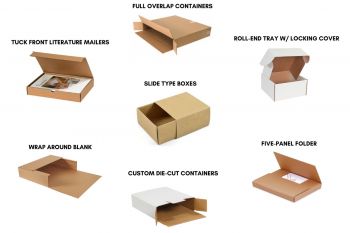
On our side that means the box gets sized to the product, not to a stock size we happen to hold dies for. Two or three depths of the same mailer beat one "large" that ships half empty. We re-cut the dieline before we sell you extra void fill, because extra fill is freight weight you pay twice.
If your carton already travels 90% full on the long side, this rule changes nothing for you. Do not pay for a redesign you do not need.
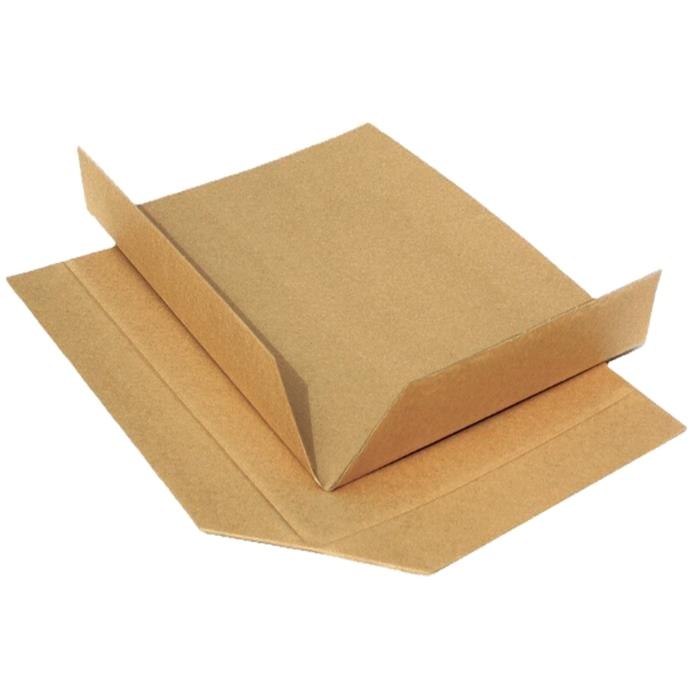
For stacked freight, layer pads and corner protection let you tighten a pallet pattern instead of adding fill. Our Corrugated Cardboard Sheet and Layer Pads line covers 0.5–1.5 mm kraft anti-slip sheets, and the Mailer Boxes range is where depth re-sizing happens.
Recyclability is where material choices stop being free
"Recyclable in an economically viable way by 2030" is a design test, not a bin test. A board that technically pulps but drags foil, adhesive and laminate into the recovery stream is exactly what this is about.
The frictions on paper packaging are well known: PE or wax dispersion coatings on grease-proof food boxes, heavy metallised foil, thick UV varnish, dark litho labels, wet-strength treatments, and adhesives that refuse to float off in the pulper. None of them is banned today. All of them move you away from a clean recyclability claim, and all of them are decisions you make before we quote, not after.
We already publish the paper and board on every product page, so the ask on your side is simple. Get the barrier system named in writing. Have the material identification marked per the EU packaging material identification system (Decision 97/129/EC) on the shipping mark. Label the carton for the waste stream your customer's council actually collects. The harmonised sorting labels are still rolling out; the Commission published guidance for businesses in March 2026 and a FAQ in August 2026.
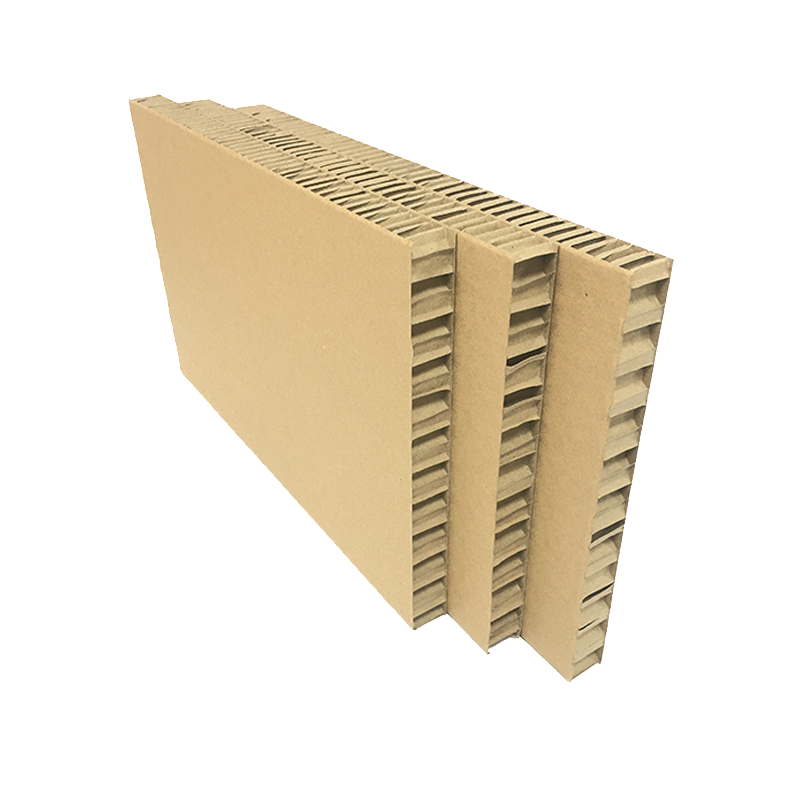
Honeycomb board is the usual substitute for EPS foam and wood dunnage in EU-bound freight. It needs no ISPM-15 heat treatment and triggers no phytosanitary check. See our Honeycomb Cardboard Sheet And Related Products range, and our comparison of honeycomb versus corrugated cardboard.
PFAS, grease, and the food boxes people get wrong
PPWR sets limits on PFAS in food-contact packaging where they exceed certain thresholds. Paper board for pastry, burgers and ready meals is where fluorinated barrier chemistry historically lived.
Ask three questions of any supplier, including us. Which barrier system is on this board. What the supplier declares in writing about intentionally added fluorinated substances. Which food-contact document covers the printed and coated article. If the first answer is "it's in the price", you have no specification. If the second answer is a shrug, you have a recall risk carrying your company name.
Water and grease resistance carry a recycling cost too. Our Vegetable Box & Fruit Box & Seafood Boxes range is where wet-strength and coating decisions show up most, and produce boxes for the EU market should be quoted with the coating named rather than assumed.
What to check on your next purchase order
- Name the obligated party. Who registers under extended producer responsibility in the destination Member State: you, your importer, or your distributor. Settle it before the first container.
- Put the void target on the PO. State the maximum empty-space ratio you need on the packed carton, and ask for inner dimensions and carton cube in the quotation.
- Get board and barrier in writing. Paper grade, flute, coating system, laminate, foil and varnish, each named.
- Require the material identification mark on the shipping mark, plus the sorting label for the destination market.
- Ask for documents by name before production, not after: declaration of compliance for food-contact articles, chain of custody if your buyer wants it, and the substance declaration your retailer asks for.
- Keep one control sample per specification with its paperwork attached. That is what you show a market surveillance authority in 2027.
What each format costs today, and where it helps
These prices are published on our own product pages as of September 2026, not estimates. Freight, board grade and print run move them, so read them as the shape of the range.
| Format | Material as listed on the product page | Site price, Sep 2026 | Why it helps under PPWR |
| Kraft anti-slip pallet top sheet, 0.5–1.5 mm | Corrugated board, kraft | US$0.52–US$1.98/pcs | Tighter pallet stacking; replaces plastic corner protection and strap padding |
| 3-layer E-flute mailer, kraft or white liner | 3 layer E flute corrugated paper | US$0.20–US$1.00/pcs | Depths sized to the product, so you meet the 50% void cap without extra fill. Example: custom corrugated mailer BDL series |
| Plain unprinted kraft tuck-top box | Corrugated board | US$0.20–US$0.50/pcs | No laminate, foil or heavy varnish to separate at the pulper; the cheapest recyclability story you can buy. See Plain Mailer Box Without Printing |
| Honeycomb cardboard sheet and panels | Honeycomb Cardboard | No list price; quoted per size | Replaces EPS foam and wood dunnage, no ISPM-15 treatment, lighter shipment per unit protected |
Minimum order quantity and lead time are not published per format on our site. They move with size, print colours and board grade, so we confirm both against a drawing rather than print a number that would mislead you.
Frequently asked questions
Does PPWR apply to cartons imported from China? Yes, and origin is beside the point. The regulation covers all packaging placed on the EU market regardless of material or origin. The obligation falls on the economic actor who places packaged goods there, which is normally your importer or you, not the Chinese factory.
Is our carton illegal after 12 August 2026 if it has a PE lining? Not automatically. Laminates and coatings are not blanket-banned for paper packaging. They make a clean recyclability claim harder, and they are the first thing an authority will ask about.
What is the 50% rule actually measuring? The empty-space ratio of grouped, transport and e-commerce packaging: the void inside relative to what you ship. Above 50% becomes the ceiling for those formats from 2030.
Do we need a recycled-content percentage for fibre board? Not from PPWR. The binding recycled-content percentages are written for plastic packaging. Recovered-fibre content in corrugated is a cost and performance decision, not a PPWR threshold.
Do you provide the compliance documents? We provide what can legitimately be attached to your order, and we say before production which of your requested documents we hold and which must come from your importer. Registering under extended producer responsibility in a Member State is not something a factory can do on your behalf.
Does the December 2025 simplification proposal change any of this? Not in a way you can bank on. The Environmental Omnibus proposal would suspend the obligation for producers to appoint an authorised representative when selling packaged goods directly to consumers in another Member State. As of 21 September 2026 it is still being examined by the European Parliament and the Council.
If we only sell into the US, can we ignore this? For PPWR, yes. Your constraints are state-level EPR, bottle bills and your retailer's sustainability specification. Do not let a supplier price EU compliance into a US-only carton.
Sources
- Regulation (EU) 2025/40 on packaging and packaging waste, EUR-Lex. In force 11 February 2025, general application 12 August 2026.
- European Commission, "Packaging waste" topic page and "Facts about the new EU rules on packaging and packaging waste", DG Environment.
- Commission guidance document on PPWR implementation for economic actors and Member States (March 2026); Commission PPWR FAQ (August 2026).
- Commission Environmental Omnibus proposal (December 2025) on the authorised-representative obligation, under examination.
- Decision 97/129/EC establishing the European packaging material identification system.
- Unit prices and material descriptions taken from birtleypack.com product pages, checked 21 September 2026.
Last verified: 21 September 2026, by Birtleypack product and compliance documentation. The regulation text prevails over this summary; when a deadline in your market is close, we re-check against the Official Journal before you commit tooling.
Send three inner dimensions, your packed weight and the destination port. We will come back with flute, board grade, the named coating, carton cube, and the void ratio you would be declaring.