Pizza Boxes in Production: Flute, Die Lines and the Defects We Screen For
TL;DR
Most pizza boxes we run are single-wall corrugated with a kraft or paperboard facing. The foil-lined version is a different build, chosen for how long the pie stays in transit, not for how the box looks on a counter.
The die line fixes four things before the first sheet runs: the fold-over lid, the score positions, the vent pattern and the lock tabs. Moving a score after the die exists means a new sample and another 7 days.
We screen six faults on the line: crushed flute, print out of register, glue squeeze-out, wavy board from moisture, cracked scores on coated board, and an internal dimension that is off the drawing.
If you buy pizza boxes by the container, the production details decide more than the artwork does. This page covers the board we build from, how a die line is fixed, the defects we catch before the pallet is strapped, and the details we need before a die is cut.
Which board goes into a pizza box
Our pizza box range lists three paper types: kraft paper, paperboard, and corrugated board. Which one you get is decided by two numbers that have nothing to do with printing: the diameter of the pie and the number of boxes that will sit on top of each other in the delivery bag or on the shelf.
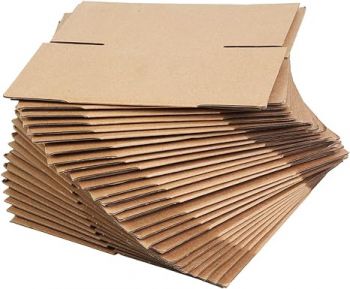
A slice box is a folding job. It is die-cut, creased and glued from paperboard or kraft paper, and it carries one portion, so the board does not have to hold a stack. A full-pie box in single-wall corrugated is what we run when boxes are stacked six or eight high, because the flutes are what carry the load between the liners; flatten the flute and the box loses its height under load even though the board still looks intact.
The foil-lined family is a three-part build: board, foil, and the adhesive between them. Its own listing describes a double layer of aluminum foil with an air gap behind it, and states a holding time of 45 to 60 minutes at 158 to 185 F. That figure is the box's own claim, printed on the page it comes from, not a lab report; if a holding time is critical to a promotion, test it on your pizza, in your bag, on your route — not on our sample table. See the kraft foil pizza box listing for the build we run most often.
Sizes are dictated by the menu. On the foil family the listings run from a 6-inch slice box to an 18-inch family size, the hexagon box is listed in 6 to 12 inch sizes, and the drawer build goes up to 24 inches. Every one of them is quoted on the dimensions you give us, because a 12-inch box from one printer is not a 12-inch box from another: the useful number is the internal length, width and height in millimetres.
The die line: what is fixed before the first sheet runs
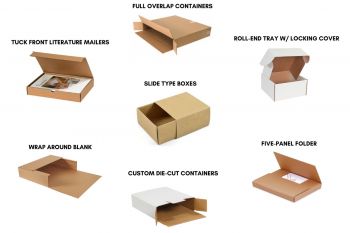
A pizza box is a die-cut construction, and the geometry of the cut and the crease comes from a printed catalogue of standard styles rather than from a free-hand drawing. The FEFCO code is the reference the trade uses for those styles, and the production process pages from the same body describe how a flat sheet becomes a folded box. We quote a pizza box against that geometry because it has been tested by thousands of runs; drawing a new lid-lock from scratch buys you nothing and costs you a die.
Four things get fixed at the die stage. The fold-over lid: how far the lid overhangs the base, which decides whether the box stays shut in a bag. The score positions: the creases that let the board fold without cracking, which is where coated or laminated board has to be treated differently from plain kraft. The vent pattern: punched holes or a vented corner that let steam out, because a sealed box steams the crust soft. The lock tabs: the front lock and the corner locks, which have to hold without tape if the buyer wants a tape-free box.
This is the stage where changes are cheap and where a late change is expensive. When we build a sample, the score positions and the lock geometry are what the customer is actually approving, along with the print. Move a score by a few millimetres after the die exists and the die has to be re-made, which is a new sample and another 7 days on the clock, in a queue that has been filling up while you decided.
The defects we screen for on the line
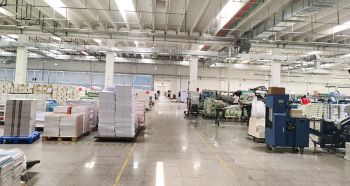
On our line the sheet leaves the die cutter and is checked against the drawing before the run is allowed to continue. Six faults cover most of what we reject:
Crushed flute. Visible as a flat stripe across the board, usually where the sheet was pulled through the machine badly or where the pallet was stacked too high. On a box that has to carry a stack, a crushed stripe is a collapsed column, so the first-off and the sheets after every pallet change are checked by hand.
Print out of register. A logo printed half a millimetre off on a slice box is not a packaging failure, it is a brand failure. Register is checked on the printed sheet before it is cut, because once the box is glued the sheet is gone.
Glue squeeze-out. Side-seam glue that creeps onto the food-contact face or blocks a lock tab. It is a two-second check on a folded box and a repack of a whole carton if it reaches the customer.
Wavy board from moisture. Kraft board takes on water in humid weather and the sheet develops a wave; a wavy sheet will not register cleanly and folds with a twist. We keep incoming board in the dry store and check the stack, not just the top sheet.
Cracked scores on coated board. A matt-laminated or UV-coated sheet sometimes cracks along the crease when it is folded cold. The testing methods the trade publishes cover board-side checks of this kind; on the floor the test is simply to fold a finished box and look at the crease.
Wrong internal dimension. The most expensive fault, because it is invisible until the pizza will not fit. It is caught by measuring a folded box, not by measuring the flat sheet: the fold height eats into the internal space.
The order of those six is not random. The last one changes your delivery date; the other five change your reputation with your own customers.
When a custom pizza box is the wrong purchase
Two cases where we tell buyers to keep the money.
The first is volume against geometry. If the order is a few hundred boxes for one event, a stock box in a size close to your pie wins: you are paying for a die and a sample to move a lid by a few millimetres, and the container you were going to fill is nowhere near full. Come back to a custom die when the annual volume makes the tooling free.
The second is the foil lining. If your pies leave the counter and are eaten within twenty minutes, the foil build is extra cost, extra weight and an extra material in the recycling stream for a holding time nobody on that route will test. Foil earns its place where a delivery run is long, where the box is stacked in a hot bag, or where the buyer is contractually promising a warm pie.
What to send us before a die is cut
Six things, and the first three are numbers rather than files: the three internal dimensions in millimetres, the pizza diameter and the slice count, and the weight of a loaded box. Then the artwork as a vector file with fonts outlined, the annual or per-order quantity with the destination port, and the date the boxes must be in hand. With those we can sample, quote and hold a slot in the run.
Die-line sample of one construction, before a mass run
7 days
Mass production
Counted from artwork and die approval, not from enquiry
15 days
Quotation validity
Board, print and freight move; the number does not hold
7 days
Paper types on the range
What the pizza box listings publish
Kraft paper, paperboard, corrugated board
Finishing options
Listed on the product pages, applied to the printed sheet
Matt or gloss lamination, varnishing, UV coating, hot foil stamping, embossing
Holding time, foil-lined build
The figure printed on the product listing itself
45 to 60 minutes at 158 to 185 F
Minimum order quantity
Set by structure, size and print run
Confirmed on the drawing with the quote
Size ranges, paper types and finishing options come from the product pages in our pizza box range. The holding time is the claim printed on the foil-lined listing itself, and the lead times are our standing terms.
What buyers ask us in production
Can a pizza box hold a stack without a board underneath? Single-wall corrugated in the right grade does, up to a point. The flute carries the load between the two liners, so the number that matters is the grade, not the caliper. Tell us how many boxes stack and how long they sit and we will state the grade on the drawing.
Do vent holes really keep the crust crisp? They let steam out, which is the point; a box with no vent keeps the heat and the moisture together. Vent area is set at the die stage, so decide it while the drawing is open rather than after the sample.
Can you print on the inside of the lid? On a kraft or paperboard box, yes. Send it as a second file so the knife and the print are set together, because the inside face is printed before the box is glued.
How long does a new die take? Sampling is 7 days and mass production 15 days from artwork and die approval. The clock starts on approval, not on the enquiry, and a public holiday inside the window is not production time.
What is your MOQ on a pizza box? It changes with structure, size and print run, so we confirm the number on the drawing instead of publishing one figure for the whole range. Send the dimensions and the quantity goes into the quote.
Do you test the box for compression? We check the board and the finished box against the drawing, and the trade publishes test methods for board grade. A printed compression report for your exact box is a different job: ask for it and we will tell you what it involves before you plan the order.
How long is the quotation valid? 7 days from the date we send it.
Sources
FEFCO, FEFCO Code (standard die-cut constructions) — fefco.org
FEFCO, production process (sheet to folded box) — fefco.org
FEFCO, testing methods and recommendations (board and box checks) — fefco.org
Size ranges, paper types, finishing options and the 45 to 60 minute holding time are taken from the pizza box listings published on this site. The 7-day sampling figure, the 15-day production figure and the 7-day quotation validity are our standing terms, confirmed internally on 22 September 2026.