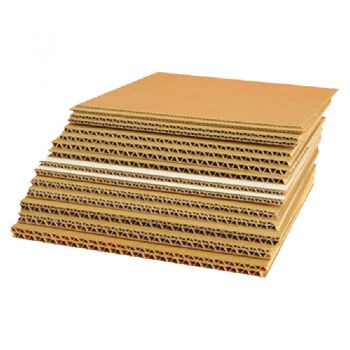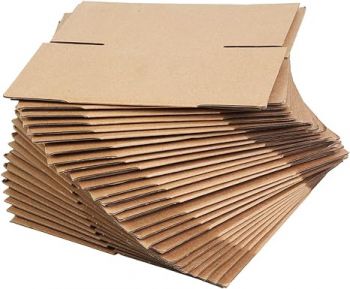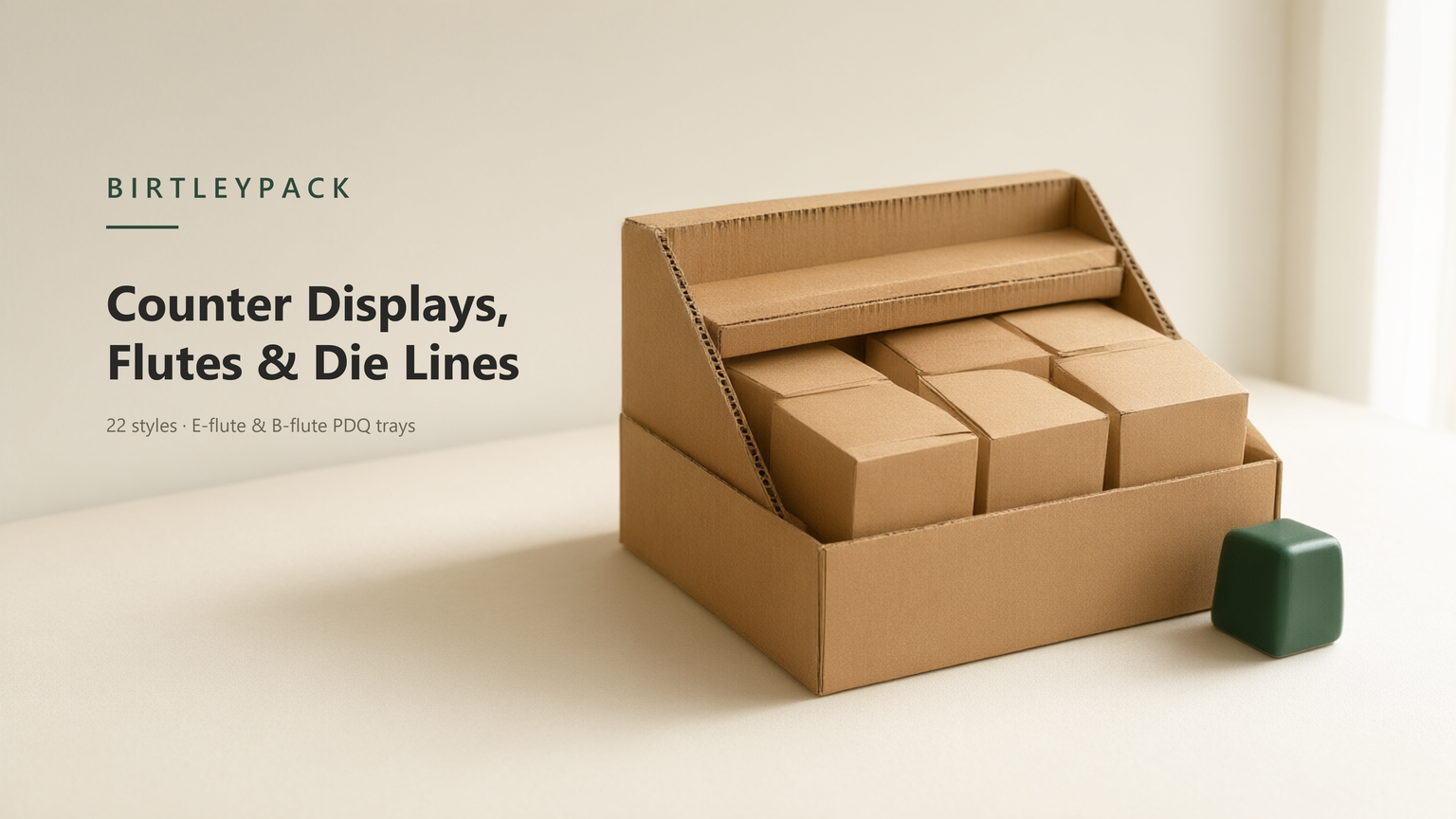
Cover illustration: kraft PDQ counter display tray. Illustration, Birtleypack.
This page is for buyers who have approved a counter display design and now have to sign off the die line before we cut steel. We build PDQ trays, counter units and floor displays in Xiamen. Here is what happens between your artwork and a flat-packed carton, and the defects we screen on the way.
TL;DR
- The counter display collection lists 22 product pages as we count them on 26 September 2026: counter-top trays, dump bins, sidekicks, pallet displays and standees, built in E-flute or B-flute corrugated board.
- Four fields decide the build: internal dimensions, flute, the die line and the way it ships. Our display pages publish an order quantity of 100 units; we confirm 7 days sampling and 15 days mass production from artwork and die approval.
- Print registration, crease cracking, die-cut nick strength and size drift are the four things we check at first article. Send the internal sizes, the load each shelf carries and the shelf height you have to fit, and we can read the die line against them.
The build, in figures
Everything in the table below is either counted on our own pages on 26 September 2026 or confirmed with you on a quote. Nothing in it is a market average.
| Item | Figure we work to | Where it comes from |
| Product pages in the display collection | 22 | Counted on /collections/display-box on 26 September 2026 |
| Flute used for counter and PDQ displays | E-flute and B-flute | Stated on the display product pages, for example the makeup counter display page |
| Print finishes listed on the display pages | 7 | Matt lamination, glossy lamination, varnishing, UV coating, stamping, embossing, gold foil |
| Order quantity published on the display pages | 100 units | Product page FAQ; per job we re-confirm against size and structure |
| Sampling | 7 days | From artwork and die approval |
| Mass production | 15 days | From artwork and die approval |
| Quote validity | 7 days | From the date we issue the quote |
| Shipping form | Flat-packed | Pre-filled co-packing only where we agree the packing flow in advance |
| Container reference, 40 ft high cube, internal length | 12,032 mm | Published equipment example from a container logistics operator, not our loading standard; we confirm the loading plan per order |
| Internal width | 2,350 mm | |
| Internal height | 2,700 mm |
When a counter display is the wrong answer
Three cases where we tell buyers to spend the money elsewhere. If your shelf height is fixed by the retailer and your carton already fits it, a display that adds a base the fixture has no room for will sit in the warehouse. If you need 40 or 50 units for a test market, the die and the setup spread over too few pieces, so run the test with a plain printed tray and buy the display once the range is settled. And if your product is heavy for its footprint, the load belongs on a floor unit with a reinforced base, not on the counter next to the till.
One refusal on process rather than structure: we do not cut a die from a sketch and a photograph. Artwork without a die line layer, or a die line without approved internal dimensions, comes back to you. That exchange is the slowest part of the job for most buyers, and it decides whether the first sample fits.
The die line, and why the flat size is not the finished size
Die-cutting, in the industry's own words, is the process where the board is cut and creased with a specifically designed form, and it sits with printing, folding and gluing inside what the trade calls converting. The FEFCO production process page puts those four operations in one definition, and most corrugated work runs through one machine that combines them. We work to that sequence: print first, then cut and crease, then fold and glue.
What a drawing cannot show is that corrugated board is not a flat material. The fluting paper is taken up into the corrugations, so the finished panel is shorter than the paper that went into it. FEFCO publishes a procedure for that figure, Recommendation 102 for determining the take-up factor of the fluting paper. It matters here because the die line defines the fold positions of a flat blank while the buyer measures erected internal dimensions on a shelf: two panels built from one drawing on different flutes do not finish at the same size, so the die is compensated before it is made.
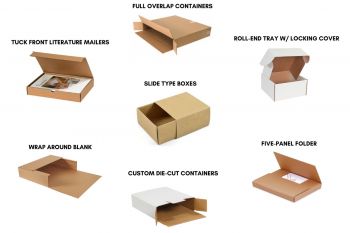
The naming convention side is easier. FEFCO code, now in its 12th edition and adopted by the International Corrugated Case Association, replaced long verbal descriptions of box construction with a code number for each design, and the latest edition added a retail and e-commerce series. When a buyer sends us a style code instead of a paragraph, the first reading of the job takes minutes rather than a day. Our own pages do the same work in plain English: counter unit, dump bin, sidekick and power wing, pallet display, standee. A job usually starts with a look at POP display boxes and floor displays before we narrow it to a bin or a shelf unit.
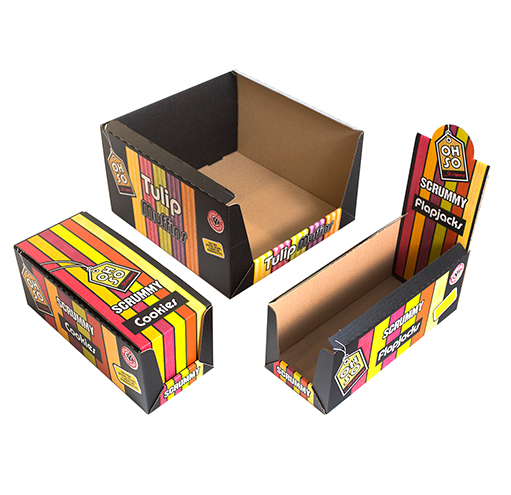
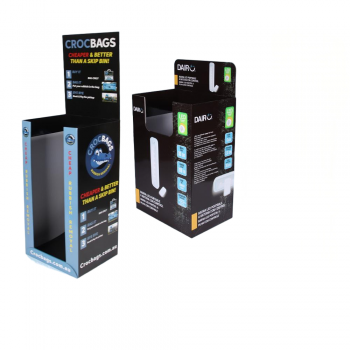
A pre-glued PDQ tray, shipped flat and opened at the shelf. Product photo, Birtleypack.
Flat-packed displays ship as loose printed blanks, so the loading plan counts blanks rather than erected units. As a reference for the carton side of that plan, one logistics operator publishes the internal dimensions of a 40 ft high cube container shown in the table above; we treat those as example equipment figures and confirm the real loading plan per order against blank size and pallet pattern.
Flute: E or B, and what it changes
Our display pages name E-flute and B-flute as the two boards we normally use for a PDQ, for the reason given there: both take high-quality print, and both hold their shape while a customer handles the box. The choice between them is a trade a buyer can feel.
E-flute is thinner. It prints with less washout on small logos and fine type, creases more tightly, and costs less shelf depth and freight volume when the tray is flat-packed. B-flute is thicker: it resists compression better and takes more punishment on the way to the store. On our line the choice follows the print first and the load second. A cosmetic tray with 8 pt ingredient text goes to E-flute, a dump bin holding loose tins goes to B-flute, and a mixed unit gets an E-flute face panel over a B-flute base — that last combination is the one where the die line is agreed panel by panel, not as one sheet. The pre-glued PDQ tray is the format most buyers start from, because it ships flat and opens on the shelf.
What we screen at first article
First article is the sample we run before the die goes into production, and it is where the four real defects show up. None of them are visible on the PDF you approve.
Print registration. On a large display panel, colour to colour drift shows at the far end of the sheet before it shows anywhere else. We check small type and fine rules at the outer edges of every panel, not only in the middle where the proof was signed. Flexographic printing is the industry's normal route for corrugated, and it is less forgiving on a full-colour photographic panel than on a two-colour logo.
Crease cracking. A fold line that splits the printed surface is a board and rule problem, not a print problem. We look at the fold after the tray has been opened and closed, because a display is folded by staff on a shop floor, not by a machine set to a drawing.
Nick strength and lock tabs. A die-cut holds the panel together with small nicks until the blank is popped apart, and it holds a folded tray with tabs and slots. A nick that is too weak lets the blank fall apart in the carton; a slot that is too tight tears the printed face when it is assembled. The sample is assembled and taken apart twice for that reason.
Size drift. We measure the erected internal dimensions against your drawing, then measure again after a day flat-packed. Take-up on the flute, board moisture and the way the panel is stacked all move the number, and a display that finishes wider than a fixed shelf allowance is scrap, however good the print looks.
The same checks cover the narrower families. A dump bin or case stacker is screened on the open front and the stacking face; a sidekick or power wing is screened on the hook the store already owns. A unit that cannot hang on the store's own fitting stays in the back room.
What we need before we cut
- Internal dimensions, erected, in millimetres or inches. Not the flat blank, and not a screen measurement.
- The load each shelf or face carries, and whether it is a single row or a full tray.
- The shelf height and width you have to fit, if the display goes into a fixed fixture.
- The flute, or the print that decides it. If you have no preference, send the artwork and we will propose E or B.
- A vector artwork file with the die line on its own layer, plus the unit of measurement for that market.
- Whether the store receives loose goods or a pre-filled tray, because pre-packed trays arrive assembled and the co-packing step has to be planned with us first.
- Sample and quantity, against the 7-day sampling and 15-day production window above.
Send those seven items and the first reply from us is a die line reading, not a price. Price follows size, flute, print and run, quoted as a range for the structure you chose and valid 7 days from issue.
Questions buyers send before ordering
What flute do you use for a counter display box? E-flute and B-flute, as printed on the display product pages. E-flute where fine print and a tight fold matter, B-flute where the unit has to take more handling, and a mix when one part of the display carries the load.
How long does a PDQ take from artwork approval? Sampling is 7 days and mass production is 15 days, counted from artwork and die approval. Die approval is the gate, so a late die line moves both dates.
What is the order quantity for a custom PDQ box? The figure published on our display pages, including the PDQ retail display page, is 100 units. It is re-confirmed per job against size and structure, and it is not the same number for every collection on this site.
Do you ship displays assembled or flat? Flat-packed by default, so the tray costs less freight and less warehouse space. Pre-assembled and pre-filled delivery is possible where we agree the packing flow in advance, and it changes the carton and the loading plan.
Can I check the print before the die is cut? Yes. A digital proof comes back to you ahead of sampling, and it is the point to correct colour, spelling and barcode size. Physical sampling follows the die approval.
What do you need to cut a die? Internal dimensions, the flute, the panel list and an artwork file with the die line on its own layer. A photograph of a display you liked is a reference, not a drawing.
How do you handle a display that has to fit a shelf we cannot change? We work from the shelf allowance downwards: the internal height first, then the tray base, then the print area that is left. If the numbers do not close, we say so before the die is ordered.
Sources
FEFCO, FEFCO Code (12th edition, adopted by the International Corrugated Case Association) — fefco.org/technical-information/fefco-code
FEFCO, Production process: converting, printing, die-cutting, folding and gluing — fefco.org/technical-information/production-process
FEFCO, Testing methods and recommendations, including Recommendation 101 on internal dimensions and Recommendation 102 on the take-up factor of fluting paper — fefco.org/technical-information/fefco-testing-methods-recommendations
Birtleypack display collection and display product pages, counted and read 26 September 2026; sampling, production and quote validity per the figures confirmed with our sales desk. Competitor sites and market averages were not used as a source.
Container equipment example (40 ft high cube, internal length 12,032 mm, width 2,350 mm, height 2,700 mm), consulted 26 September 2026 — icontainers.com/help/40-foot-high-cube-container
Last verified: 2026-09-26, Birtleypack content team with the factory floor.
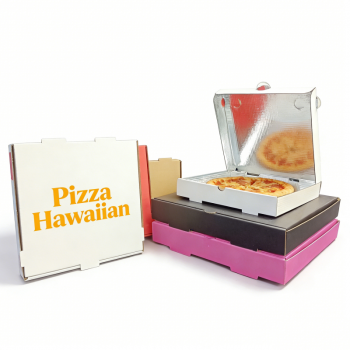
BDL Aluminum Foil Thermal Pizza Box for Food Packaging

Bdl Fanfold Corrugated Cardboard Continuous Corrugated Cardboard Sheet
BDL Free-Standing Pop-Up Floor Stand for Snacks and Products