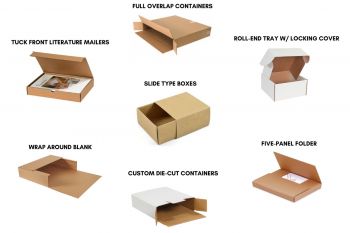
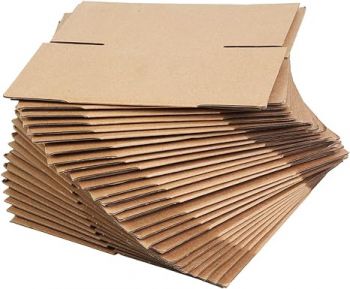
Two quotes for the same corrugated sheet, thirty per cent apart, are rarely the same board twice. We cut sheets, slip sheets and layer pads in Xiamen to your size, in kraft, single wall and double wall, and the difference between a low quote and a high one usually sits in four places: the caliper, the flute, the fibre, and whether anybody writes the grade down.
TL;DR
- The corrugated sheet and layer pad range lists 20 styles: kraft sheets and rolls, slip sheets and layer pads for push-pull handling, fanfold board, and corrugated cat scratching boards. The range is quoted by sheet size and board grade, not by a single price per sheet (checked 28 September 2026).
- Board on those pages runs from 0.5 mm to 3.5 mm in kraft, in single wall and double wall, with 3 to 5 layer builds on the heavy sheets and E-flute and C-flute named on the product pages.
- What a cheaper quote usually removes is not paper but the grade: caliper, flute letter, wall count and the certificate value that the carrier strength chart is written against.
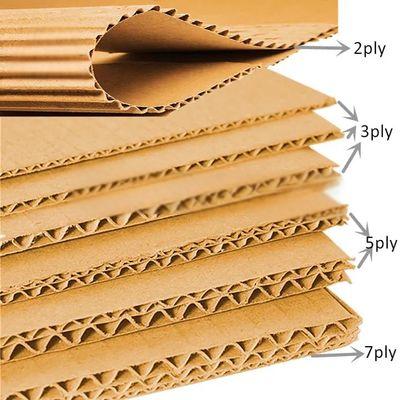
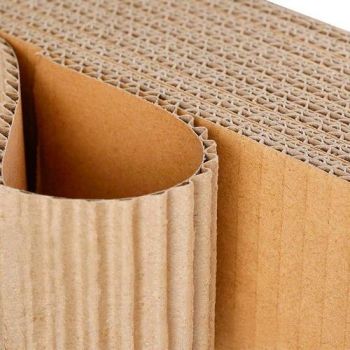
Photograph: our B/C/E flute corrugated sheet, cut square for pallet layering.
What the lower quote usually changes
None of the sheets in this range is a commodity with one specification. Thickness is listed per style, not per category: 0.5 mm, 1 mm, 1.5 mm, 2 mm, 3 mm and 3.5 mm all appear across the 20 pages, and the B/C/E flute sheet pages name the flute letter while the roll pages name C-flute. If you cut pads from a continuous sheet instead, the fanfold z-board is scored and folded at regular intervals and cut with a knife rather than a die. Liner colour is brown by default and white on request. Printing is offered, with matt lamination, varnishing, stamping, embossing, glossy lamination, UV coating and gold foil listed as available handling.
That is also the room a cheap quote needs. A supplier can hold the outer dimensions you asked for and still move every one of those variables, because a sheet that measures 1,200 x 800 mm is a size, not a specification.
| Line on the quote | What our 20 sheet and pad pages publish | What a cheaper quote usually does with it | How you catch it on arrival |
|---|---|---|---|
| Board thickness | 0.5 mm, 1 mm, 1.5 mm, 2 mm, 3 mm, 3.5 mm across the range | one 1 mm grade quoted for every size | caliper at three points per sheet |
| Wall build | single wall and double wall both listed; 3 to 5 layer builds on the heavy sheets | single wall only, described as corrugated board | lift one corner: the sheet bows earlier |
| Flute | E-flute and C-flute named on the product pages | flute letter left off the quote | count flutes over 300 mm of edge |
| Fibre and liner | kraft corrugated paper; brown or white | mixed recycled fibre, grade not declared | edge tear and score cracking on the fold |
| Surface | slip sheets are listed with a non-slip surface for push-pull forklift handling | plain liner quoted as a slip sheet | the load walks under stretch wrap |
| Declared grade | the quote states size and board grade; the grade is what we build to | no grade, no certificate value | nothing to compare with the carrier chart |
| Lead time | sampling 7 days and mass production 15 days from artwork and die approval | no date until the die is already cut | the approved dieline, dated |
| How long the price holds | a quote stays valid 7 days | an open-ended price with no date on it | ask for the validity date in writing |
For a load that travels as a parcel, the value that matters is printed on the box itself. The UPS packaging guidelines say the maximum gross weight limit is printed on the Box Maker's Certificate on the bottom flap of most boxes, and their strength chart is written in burst test and edge crush values, not in millimetres. A sheet quote without a grade has no place on that chart.
What the load gives up when the grade comes off
Take the carrier chart as the reference point, because it is the only public table most buyers ever put next to a quote. It pairs the weight of the shipped box with two lab values and a wall build:
- 0 to 30 lb, box under 75 in: 200 lb per sq in burst, 32 lb per in width edge crush, single wall.
- 81 to 100 lb, box 95 to 105 in: 350 lb per sq in burst, 61 lb per in width edge crush, double wall.
- 141 to 150 lb, box 115 to 120 in: 600 lb per sq in burst, double wall, with no edge crush figure quoted.
Read the same chart downwards and the pattern is the point: as the load grows, the burst figure climbs from 200 to 600 and the recommended wall moves from single wall to double wall. A 1 mm single wall pad quoted under a 120 lb pallet load is not a cheaper version of the double wall sheet, it is a different product. UPS also labels the whole table as guidance for containment and protection rather than a packaging specification, and points shippers to ISTA Test Procedure 3A when a packaged product has to be proved rather than argued about.
Two consequences follow for a pallet of sheets. First, the certificate value is the only number the receiving end can check against a freight claim, and it exists only if somebody declared the grade. Second, a thinner sheet does not only bend earlier, it also moves. The kraft slip sheet in this range is listed with a non-slip surface for push-pull handling, which is a property of the liner rather than of the caliper, and it is one of the first things a cheaper sheet drops. The flute profile you choose then decides how much of the pad is air, and the carrier guidelines call for layers of cardboard between layers of freight to absorb vibration while the load is in motion.
Where we cannot help with a number, we say so. We do not publish an edge crush or burst figure for these sheets as a range-wide promise, because the value depends on the grade you buy and the direction the flutes run under the load. If your customer asks for a declared grade, put the target value on the enquiry and we will quote to it or tell you we cannot reach it at that caliper.
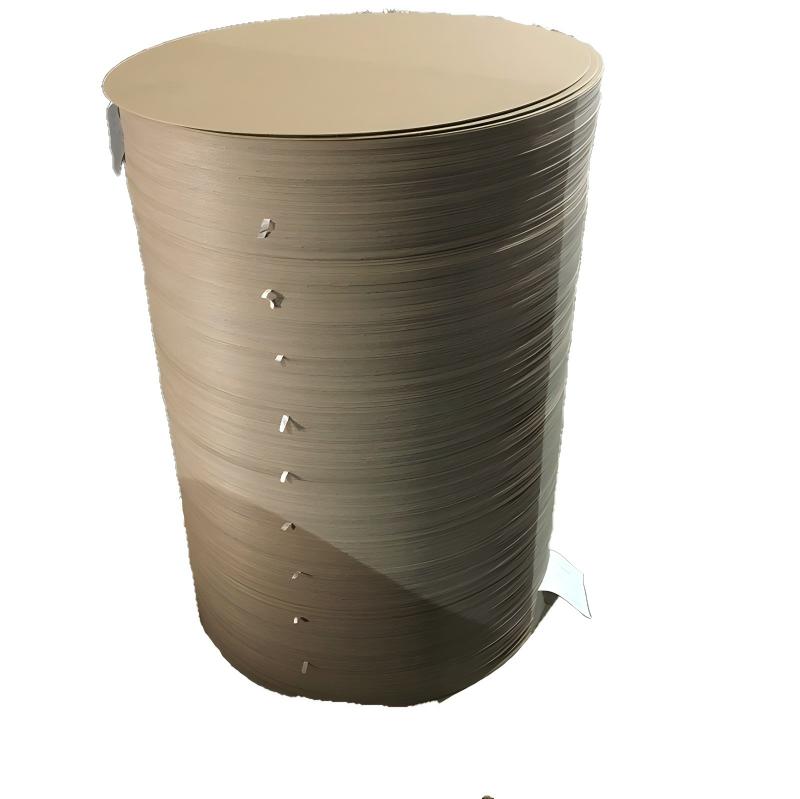
Photograph: kraft slip sheet, 0.5 to 1.5 mm, cut to the pallet footprint.
When the cheaper sheet is the right answer
Not every pallet needs a declared grade, and we would rather say that than sell a heavier sheet. If the pad only ever sits inside your own warehouse between two stillages and never enters a parcel network, a 1 mm sheet plus a corner board is a better spend than a double wall pad, and the money is better put into the corner protection. If your shipments move as parcels under 30 lb, the carrier chart itself stops at single wall and 32 lb per in width, so a double wall pad buys cube and freight weight, not protection. And if the sheet is only dunnage between layers of a load that is already stretch-wrapped and banded to the pallet, the printed version of it is money for nothing: matt lamination, UV coating and gold foil are all available here, and none of them adds a gram of compression to a spacer.
The opposite case is just as common. If the sheet is the load-bearing member under a stack, if it is reused across several trips, or if the receiving warehouse repacks onto the same pads, then the grade is the cheapest insurance on the quote. Test protocols from ISTA exist for exactly this argument, and they are cheaper than a claim.
What we need on the enquiry to quote the second sheet honestly: outside dimensions and tolerance, board thickness or the grade you are being held to, single or double wall, flute preference if the load direction is fixed, plain or printed, and the weight the pad will carry. Sampling takes 7 days and mass production 15 days from artwork and die approval, and a quote holds for 7 days. MOQ is not published as one number for this range — it moves with sheet size, board grade and whether the sheet is plain or printed, so we quote it with the sheet.
Questions buyers ask before the second quote
Is a cheaper corrugated sheet weaker, or just thinner?
It is usually both, and the two are separately quotable. Thickness is visible with a caliper; strength comes from the fibre, the flute and the wall count. A 2 mm sheet in mixed recycled fibre and a 2 mm sheet in kraft can measure the same and carry different loads.
What does 32 ECT actually measure?
Edge crush test, in pounds per inch of width, and it is the number the carrier strength chart pairs with a box weight band: 32 for 0 to 30 lb single wall, 61 for 81 to 100 lb double wall. Burst test is the other column, in pounds per square inch. If your quote names neither, you cannot compare it with the chart.
Can a 1 mm sheet go under a full pallet?
Only as a separator or a dust cover. A 1 mm sheet used as the load-bearing pad under a stacked pallet is the single most common under-specification we see in enquiries, and no lamination or coating fixes it.
Why does the low quote not name the flute?
Because the flute letter is the easiest variable to change without changing the outside dimensions. Counting flutes over a fixed length of edge is the fastest check on a delivered batch, and it needs no lab.
Does a layer pad have to match the board of the box above it?
No. The pad only has to carry the stack and stay flat, so a heavier pad under a lighter carton is normal. What does have to match is the pallet footprint: a pad that overhangs the pallet edge crushes on the overhang, and an under-sized pad lets the load sit on the carton corners instead.
What should go on the enquiry so the two quotes can be compared?
Size and tolerance, caliper or grade, wall build, flute if the load direction is fixed, plain or printed, quantity, and the load each pad carries. With those seven lines, a quote either matches the grade you asked for or it visibly does not.
Sources
- UPS, Packaging Guidelines (Box Strength Guidelines table, Box Maker's Certificate, ISTA 3A reference, pallet overhang): ups.com Packaging Guidelines PDF — read 28 September 2026.
- FEFCO, FEFCO Code and technical documentation of the corrugated industry: fefco.org technical information — checked 28 September 2026.
- Fibre Box Association, corrugated packaging reference material and the Fibre Box Handbook: fibrebox.org — checked 28 September 2026.
- ISTA, transport testing procedures referred to by carriers: ista.org — checked 28 September 2026.
- Product facts — thickness 1 to 3.5 mm, kraft liner, single and double wall, E-flute and C-flute, non-slip slip sheet surface, printing options — read from the 20 product pages of the sheet and layer pad range on 28 September 2026.
Last verified: 28 September 2026, Birtleypack content desk. Board grades and carrier rules change; check the linked document before you use a figure in a contract.
BDL 2Ply Paper Corrugated Wrapping Roll
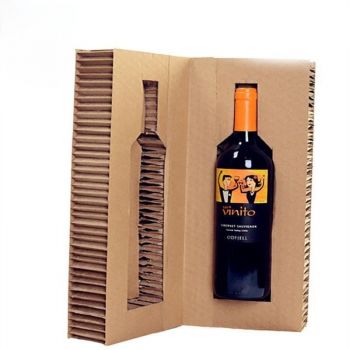

BDL Custom Cardboard Fruit And Vegetable Box Package for Shipping
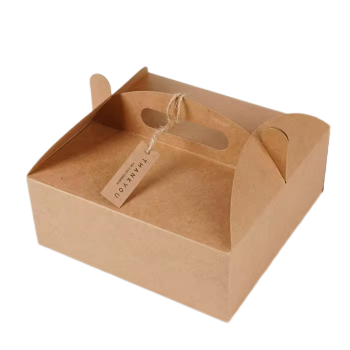
BDL Food Grade Flute Custom Cardboard Carton Pizza Box For Gift Shipping